Tuesday, 29 January 2013

The Mad Painter's nephew's friend...

Wallace Tower on Carnegie's Brae. Originally known as Benholm's Lodging after Robert Keith of Benholm, the owner.  Benholm was the brother of George Keith, the Earl Marischal. 


"Spanish" John Phillip
A little known fact - No.4 Wallace Nook - which would have been a flat in the tower once it was split up into separate dwellings - was home to John Phillip, an apprentice painter & glazier. He would go on to become a fellow of the Royal Academy of Art, and be painter famed for his scenes in Spain, earning him the name "Spanish" Phillip. 

One of his academy friends, Frank Dadd had a very strange uncle, Richard Dadd. 


Richard Dadd - the Mad Artist
The latter was insane, he murdered his own father and was thereafter locked up in an asylum - the doctors realised Richard would remain calm if allowed to paint - his works featured fairies, elves, dwarves and other strange mythical creatures.


"The Fairy-Feller's Master Stoke"
one of Dadd's oddest fairy painting
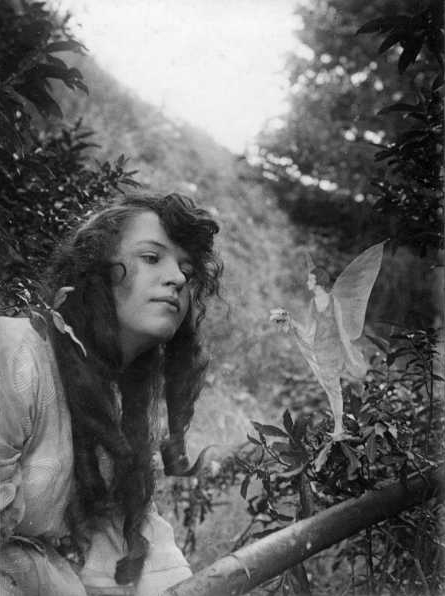
He thus he became one of the many Victorian "Fairy Painters" who popularised the subject at the very time the interest in the supernatural was growing - which led to the ultimate hoax, "The Cottingley Fairies", when two cousins tricked the intelligentsia of the day with photographs of these supposed winged sprites. 

Thus we have three degrees of separation from the Wallace Tower to the Cottingley Fairies. History is always under your feet and on your doorstep!!

"Fake" Fairy photo with Elsie, one of the tricky cousins and her fairy friend


Wednesday, 3 October 2012

Let folk say what they please!

That was the gist of the motto of the Earls Marischal, the Keith family, the full version being Ne'er ye mind fit folk say, dee ye weel and lat them say.  Only, that is a variant of the motto displayed in Marischal College's Mitchell Hall.  George Keith, the Protestant 5th earl, founded the college in 1593 as a rival to Catholic noble, Alexander Fraser's university college in Fraserburgh, founded but a year before.  George and his uncle, William Keith, the 4th earl, had basically stitched up a whole list of monastic properties between them, including the Earl's Hall in Castlegate which had been the Abbot of Deer's house.  Greyfriars was where Marischal was built; the Blackfriars/Dominicans' old estate was also claimed by the Keiths.

The family appear to have Anglo-Norman origins as many of the 13th century nobles did.  One Harvey de Keth saved the life of William the Lion, King of Scots and was awarded the title of "Great Marischal", the duties of which included being the royal bodyguard at court, and keeper of the royal regalia.  Their earldom was awarded in 1458.  They married into another settled Anglo-Norman family, the Cheynes of Inverugie, which allowed them to own both Ravenscraig and Inverugie castles situated on the river which flowed into Peterhead, one of the Keiths' major seats of power.  That allied them to Bishop Henry Cheyne of St Machar - the priest whose support for the usurped John Balliol and the Comyns brought him into conflict with Robert the Bruce.  Henry's brother, Reginald, was the one who invited the Carmelites to come to Aberdeen in 1270.  So they were well-connected even then!

After the Reformation church lands were fair game for any noble of the old or new religions; William Keith was smart, he, with royal favour, had his son Robert created "Commendator of Deer" - this meant that he was the postulant bishop - a trainee - even though he probably had no intention of following a religious life when his Dad was a Protestant!  By the time poor Mary, Queen of Scots had lost her life and her son James, VI of Scotland was on the throne, being a Catholic was very unwise.  The Keiths ingratiated themselves to the new king, and in a smart deal, resigned the lands of Deer to the crown in exchange for two things - for Robert, the Lordship of Altrie, and for his cousin George, who would be William's heir, a burgh of barony which included all the lands which belonged to the Abbey of Deer and the town of Peterhead.

Talk about sticking two fingers up at everyone else! No wonder they had such a motto!

Now the oddity in today's blog post is the fact that the version of the motto I quoted earlier is etched into a block on a wall in Jackson Terrace.  There is no earthly reason why it should be there! The land where these Victorian tenements stand was empty waste ground until at least the 1800s.  King Street wasn't started until 1808!  Where did this block come from? And why did it end up in a tenement building which backed onto the old King Street school?  If anyone has any ideas, let me know!!


Monday, 24 September 2012

Plagiarists - the plague of true authors!

It has come to my attention again that someone is copying my work and claiming it's theirs.  This person has created a whole website of COPYRIGHT material to which he has no title.  If you see ANY of the text of the articles on this blog ELSEWHERE - let me know; also report the website to the service provider; Since I am about to publish a book containing some of this material I will be entitled to take anyone to court and sue them if they steal my work.

So, be warned, I know who you are, and where you live.  Stop stealing my work.

Thursday, 21 June 2012

The Quaker's Grave


Dead Man's Walk - Newgate

I have an over-active imagination.  I know this after having jumped to the most ridiculous conclusion last week.  London’s Newgate Jail, now demolished, had a corridor linking to the courts called Dead Man’s Walk.  The grisly name indicated the dumping of executed criminals between the cavity walls, rather than a pauper’s burial.

Only initials carved into the walls indicated the locus of individual remains in this hidden burial site.

So, seeing two sets of incised letters on the wall of St Nicholas Kirkyard, near the Back Wynd gate, this week, I thought I had stumbled on a murderer’s grave!


I established from the city archivist that the wall of the Mither Kirk on what was first called ‘Westerkirkgate’ was built in the late 16th century, so would have almost been the edge of the city as it existed then.  It added up, a criminal, a despised person, buried just out of the kirkyard.  But no!

When I returned to take a closer look, I found a graveslab on the ground below the letters which informed me this was the resting place of Margaret Smith, who died in 1669 and her husband, Gilbert Mollison, Bailie of Aberdeen, who died 20 years later.  The letters were GM and MS.  Duh!  So, it was an ordinary grave after all.

Grave slab of Gilbert and Margaret Mollison - St Nick's Kirkyard

Yet on further research I discovered not only was Bailie Mollison a magistrate, and thus well-respected, but his wife Margaret was a known member of the Society of Friends; a Quaker.  Sadly the Friends were persecuted in the city, despite many prominent members including Provost Alexander Jaffray.  Quakers did not believe in the need for memorial markers, much to the annoyance of others.  Mrs Mollison was at the time facetiously described as ‘wearing thin her knees’ due to the frequency of her devotions.  Gilbert remembered her as she wished with only her initials carved in the wall of the kirkyard.  Their family added the father’s later.  

But the children of George Mollison, hosier, decided they deserved better.  In 1834, when George died, the lost grave of Margaret and Gilbert was reinstated with a large headstone.  The family’s affection was clear in the motto “the memory of the just is blessed, they rest from their labours and their works follow them.”  Now far from despised non-conformists, the Mollisons were celebrated by their descendants.

Saturday, 19 May 2012

The Public Baths


“I have a bath, twice a year, whether I need it or not,” runs the old joke, but the Victorians’ concern for cleanliness soon encouraged the creation of public bathing facilities.  In those days of overcrowded working-class housing, toilet facilities were shared, external and had little or no privacy; bathrooms were a mere fantasy!  One of the city’s early public baths which had the addition of a ‘swimming pond’ in 1869 was that established in Crooked Lane in 1851.

The earliest mention of public bathing was at the Beach.  Alexander Mowat was the owner of sea-water baths at both the Sea-Beach and the Quay, and in 1845, the well-heeled bather would pay £10/6 shillings a season for use of the facilities.

The Crooked Lane site was run originally by Archibald Grant, and the secretary was local advocate and insurance agent, D. G. Cattanach.  Mr Mowat and his partner, Alexander Mackie still ran their facilities until 1867 at the Beach and Regent Quay, the latter doubtless catering for grubby sailors disembarking from merchant ships.

1867 OS Map of Aberdeen showing the Baths in St Andrew Street/ Crooked Lane

Modesty was clearly preserved at the Aberdeen Public Baths, as a ‘female entry’ was advertised as being from 40 St Andrew Street.  Ladies could attend to their ‘toilette’ without the fear of any gentlemen spotting them in a state of undress!  

When James Angus took over as superintendent of the baths, he advertised his facilities in the Post Office directory.  In 1857, a first class hot bath or shower would cost one shilling, but if you were a bit short on cash, and liked a brisk cold dip, it would only set you back 1 old penny; salt was 3d extra!  Later superintendents, like Donald McKay (from 1862) only felt it necessary to advertise the opening times, which were from 6am to 9.30pm, daily.  His successor, William Cameron, amended Sunday openings to just 90 minutes from 7am, presumably so as not to disturb local churchgoers.

The Crooked Lane Baths closed in 1887, and transferred to larger premises at Constitution Street.  This was superseded in 1898 by the Beach Bathing Station.  Many folk would still not have baths at home even by the time the Uptown Baths opened in 1940.  Swimming is still very popular in the city, and a new pool or ‘aquatics centre’ is slowly rising from the ashes of Linksfield Academy on King Street, but the days of public bath houses have gone forever.

Thursday, 5 April 2012

Road to the Gallows


The swinging Sixties; the Profumo Scandal showed morals were on the decline.  But in 1963, Aberdeen had its own case of fatal attraction which would lead, for one man, directly to the execution chamber.

Henry John Burnett – the last man hanged in Scotland – had an affair with a married woman.  In a fit of jealous rage he shot dead her estranged husband in her mother’s house in Jackson Terrace.  Harry would later tell a constable who looked after him at his trial that he had given Thomas Guyan ‘both barrels’.  His escape route out of the house towards a garage in Seaforth Road, where he would commandeer a car, with his paramour, Margaret, had a chilling significance for his eventual fate.

Rewind to 17th century Aberdeen, and Parson James Gordon’s fascinating illustrated map of the city.  There were two routes north in those days, one through ‘Aberdon’, part of Kings College’s university town and the other via the links, which passed by the Gibbet.  Situated on a lonely hillock opposite the Broad Hill, the ‘hanging tree’ stood as a warning to all.  Often there would be the gruesome skeleton of the last criminal executed there, swinging in the breeze, its empty eye sockets terrifying any traveller on the route.


Today the Gallows Hill, as mentioned previously in this blog, stands at the top of Errol Street by Trinity Cemetery; that medieval route north now follows Park Road and crosses Urquhart Road at Urquhart Lane.  Did it occur to the fleeing Harry Burnett, three centuries later, that he was within sight of the ancient place of execution? Urquhart Lane passes directly by the corner of Jackson Terrace and the house where the murder took place.

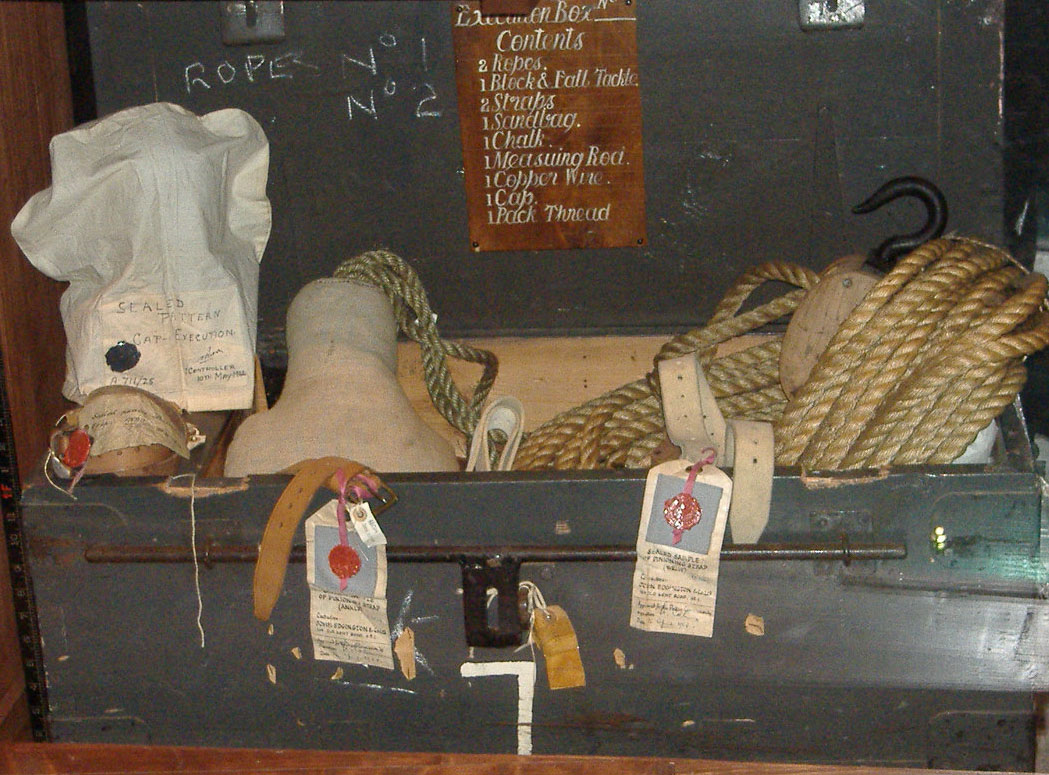
Executioner's kit - gruesome legacy of capital punishment
In August 1963, Harry would be the only man to face execution in Aberdeen since John Booth had been hanged at the Castlegate in 1857.  The former’s death took place in the privacy of Craiginches Prison, the only time the execution suite was used before the abolition of the death penalty in 1969.

The significance of the old Gallows’ road may indeed have eventually dawned on Harry, as a retired policeman recalled his anguished words when leaving the dock a condemned killer, ‘I’m goin’ tae hang!’

Urquhart Lane, an anonymous street of garages has witnessed many on that long final road, perhaps none more tragic than Harry Burnett, the fair-haired lad who didn’t intend to kill.

Thursday, 1 March 2012

Skipper Scott and Prince Jamie


Peacock Close - c.1900

Most folk in Aberdeen have heard the name Peacock Court, either because of a local art studio or the city’s first dancing master, Francis Peacock after whom the lane is named.  The next one off Castlegate is Peacock Close, its old name, however, was Skipper Scott’s Close.

‘Skipper’ Alexander Scott was a Jacobite, a supporter of the exiled Catholic dynasty of Britain.  It would be he who gave hospitality to the ‘highest Stuart o them aa’ on a dank, foggy night two days before Christmas 1715.  Scott was a ship owner and lived in the large tenement which stretched all the way back to what was then a great expanse called the King’s Meadow; now East North Street.  He and fellow Jacobites including George Keith, the 10th Earl Marischal, were delighted and honoured to receive ‘The Old Pretender’ aka Prince James Edward Stuart, to the city.

However, by November of that year, the Prince’s army, led by his deputy, John Erskine, the Earl of Mar, had been defeated at Sheriffmuir.  It seemed James’ cause was lost before he even arrived.  Neighbours of Skipper Scott reported seeing three men on horseback, dressed in French naval officers’ uniforms arrive outside the close late on the 23rd of December.  The skipper was seen to bow to one of his guests as they dismounted.  Jacobites all knew this was their future king, who at the time was suffering from a cold and had only arrived in Scotland the previous night.  Alexander probably gave the prince a king-sized feed and sent him to rest with a wee dram.  Of course, the 1715 Rebellion failed miserably and James Stuart left in February 1716 from Montrose, never to return.

Door lintel showing Alexander Scott and Janet Kinear's initials

Very recently, I took a wander up Peacock Close and discovered a very interesting sight:  On the left wall halfway down the close, you will find a lintel stone with two sets of initials: AS, IK and the date 1710.  Parish records reveal the marriage of Alexander Scott and Janet Kinear in 1696.  Could the ‘I’ be a ‘J’ which was not uncommon in late medieval script?  If so, then the couple moved in five years before Prince Jamie came to call, and perhaps it was Mrs Janet Scott who brought the ‘uisge beatha’ for His Royal Highness to drink almost three centuries ago.